
Managing Back Pain Flare Ups Over Christmas
Christmas is often a time of longer meals, more sitting, extended periods on your feet in the kitchen, and disrupted routines. While this season brings connection and celebration, it can also place extra strain on the back.
In clinic, we commonly see back pain flare ups at this time of year. These episodes are rarely caused by one single activity. More often, they develop due to prolonged sitting, standing for long periods, travel, reduced movement, and increased physical and emotional load.
The good news is that small, regular movements can make a meaningful difference.
Why back pain often flares up at Christmas
Back pain flare ups around Christmas are often linked to a combination of factors, including:
Long periods of sitting during meals, socialising, or travel
Standing for extended periods while cooking or hosting
Reduced daily movement compared to normal routines
Increased stress, fatigue, and poor sleep
Less opportunity for recovery between busy days
When the body stays in one position for too long, joints stiffen, muscles fatigue, and sensitive areas can become irritated.
Gentle movement matters more than perfection
You do not need a full exercise routine to help your back. Short, gentle movement breaks throughout the day are often more effective than doing nothing until pain escalates.
Simple ideas include standing up every 30 to 45 minutes, taking a short walk after meals, and changing position regularly rather than staying still.
Gentle stretches to ease stiffness
The following exercises are commonly used in clinical practice to help reduce stiffness and restore comfortable movement. They should feel gentle and controlled. Move slowly and stay within a pain free range.
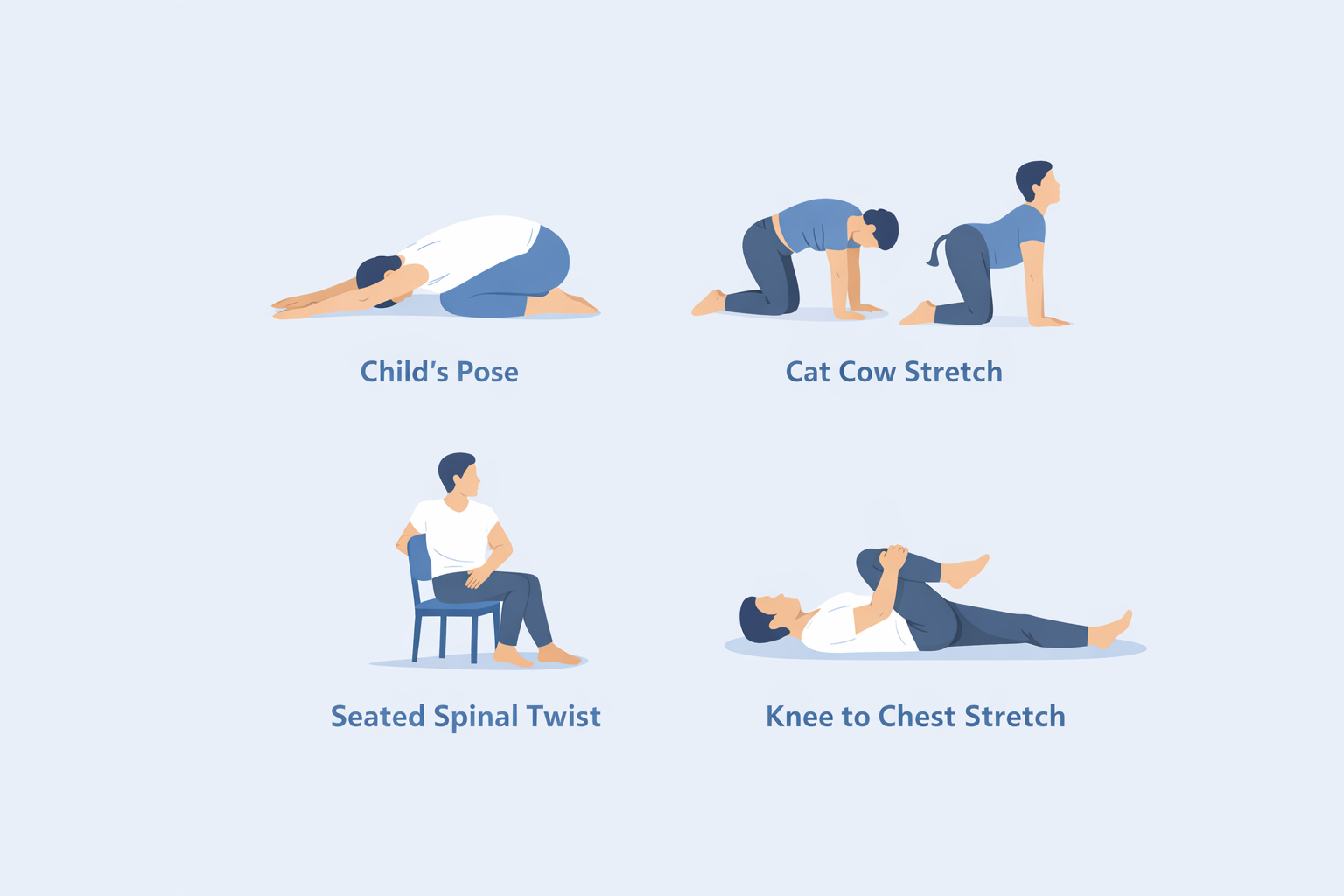
Child’s Pose
Kneel on the floor, sit back towards your heels and reach your arms forward. Allow your back to gently lengthen while breathing slowly.
Cat Cow Stretch
Position yourself on hands and knees. Slowly round your back as you breathe out, then gently arch it as you breathe in. Move smoothly between the two positions.
Seated Spinal Twist
Sit upright on a chair with both feet flat on the floor. Gently rotate your upper body to one side while keeping your hips facing forward. Hold briefly, then change sides.
Knee to Chest Stretch
Lie on your back and bring one knee towards your chest, holding behind the thigh. Keep the opposite leg relaxed. Change sides slowly.
These movements can be done once or twice a day and are particularly helpful after long periods of sitting or standing.
Simple posture and support tips
Small adjustments can reduce strain during busy days:
Gently engage your core muscles when standing for long periods
Avoid locking your knees when standing in one position
Use a footstool or alternate foot position while cooking
Sit with feet supported and screens at eye level where possible
The aim is not perfect posture, but regular variation.
When to seek support
If back pain persists, worsens, or begins to affect sleep, daily activities, or enjoyment of the festive period, professional support can help. Early input from one of our Osteopaths often prevents flare ups from becoming longer lasting problems. See our availability here.
A supportive gift idea
If you are looking for a thoughtful and practical gift, our gift vouchers can be redeemed on massage, osteopathy or foot health treatments. They can also be a gentle reminder to prioritise your own wellbeing during a busy season.
We are here to support you
Christmas does not need to be pain free to be meaningful, but you should not feel you have to push through unnecessary discomfort.
If pain, tension or stress are starting to take hold, we are here to support you.
The Waterside Practice
10a Mill Green, Warboys, Cambridgeshire, PE28 2SA
01487 209 084