
Inflammation Explained: What Your Body Is Doing and How to Help It
In clinic, inflammation is something I see every day. It often presents as sudden pain, stiffness, or restriction that seems to come out of nowhere. A patient might walk in with acute back pain, clearly distressed, sometimes tearful. Not just from the pain itself, but from the frustration of being stopped in their tracks, or the fear of what the underlying problem could be.
A large part of my role in those moments is not just hands-on treatment, but explanation. When someone understands why they are in pain, the body often begins to settle. The fear reduces, breathing changes, muscle guarding softens, and movement becomes possible again. That shift alone can be incredibly powerful.
So, let’s take a closer look at what inflammation actually is, in a way that helps you understand your own body better.
What is inflammation?
Inflammation is your body’s natural response to irritation, overload, or injury within tissues such as muscles, joints, ligaments, or tendons. It is not damage in itself, but part of the repair process.
When something is strained or irritated, your body does not panic. It responds in a highly organised way, sending signals and resources to protect and repair the area.
At a biological level, this involves a series of chemical messengers working together.
Cytokines
Cytokines are the body’s early warning signals. When tissue is stressed or injured, they are released to communicate that something needs attention. They help coordinate the inflammatory response and bring in the cells required for repair.
Prostaglandins
Prostaglandins are closely linked with the pain you feel. They sensitise the surrounding nerves, making the area more aware and reactive. This is not a flaw in the system, but a protective mechanism, encouraging you to slow down and avoid further strain.
Histamine
Histamine increases blood flow to the affected area and allows blood vessels to become more permeable. This is why injured areas often feel warm and slightly swollen. It is your body creating access for healing cells to reach the tissue.
White blood cells
White blood cells act as the clean-up and repair team. They remove damaged tissue and begin the process of rebuilding. This stage is essential for proper healing, even if it comes with temporary discomfort.
Put simply, inflammation is your body organising a response to protect and repair you.
How does inflammation reach a joint or muscle?
In many cases, there is no dramatic injury. It may be something as simple as bending awkwardly, lifting something slightly off balance, or even a build-up of tension over time.
At a tissue level, small areas of strain or micro-damage occur. Your body detects this immediately.
Blood flow increases to the area, bringing warmth. Fluid and immune cells move into the tissue, creating swelling. Chemical signals increase sensitivity, which you experience as pain or restriction.
This is where things can escalate. The pain itself can trigger concern. You may move differently, hold tension, or avoid movement altogether. Muscles around the area begin to guard and tighten, which can increase discomfort further.
This is something I commonly see with acute back pain. A relatively small strain can trigger a significant pain response, not because of serious damage, but because the body is trying to protect you.
When we take time to explain this, patients often visibly relax. As the fear reduces, the muscle spasm begins to ease, and movement becomes less threatening. That is often the turning point in recovery.
Acute vs persistent inflammation
Acute inflammation is a normal and necessary part of healing. It comes on quickly after irritation or injury and settles as the tissue repairs.
Persistent inflammation is different. This is when the body continues to behave as though there is ongoing threat, even when the original issue should have resolved. This can be influenced by ongoing strain, reduced movement, stress, or previous injury patterns.
It is also important to recognise that underlying health conditions can influence how your body responds to inflammation. Some people may have a more sensitive or prolonged inflammatory response due to factors such as autoimmune conditions, metabolic health, or previous illness. In these cases, symptoms may last longer, feel more widespread, or not follow a typical recovery pattern.
In practice, this is where pain can become more complex and less predictable, and where a broader view of health becomes important.
What can aggravate inflammation?
Inflammation is not just driven by the initial injury. It is influenced by how the body is functioning as a whole.
Ongoing mechanical strain, such as poor movement patterns or repeated overload, is a common factor. Long periods of sitting or reduced activity can slow circulation and affect how well tissues recover. Poor sleep interferes with the body’s ability to regulate inflammation, while stress can heighten sensitivity and prolong symptoms.
Diet plays a more significant role than many people realise. Regularly consuming high amounts of sugar and ultra-processed foods can promote a more inflammatory environment within the body. These foods can disrupt blood sugar balance, increase inflammatory signalling, and over time make tissues more reactive and slower to recover. It is not about being restrictive, but about recognising that what you consistently eat can either support or challenge your body’s ability to heal.
Previous injuries may also leave behind subtle compensations that continue to place strain on certain areas.
From an osteopathic perspective, it is often the combination of these factors that keeps inflammation lingering.
How can you help reduce inflammation?
The aim is not to switch inflammation off completely, but to help your body move through it efficiently.
Gentle, supported movement is one of the most effective tools. While it is natural to want to rest completely, too much stillness can actually slow recovery. Small, comfortable movements help circulation and signal to the body that it is safe to move again.
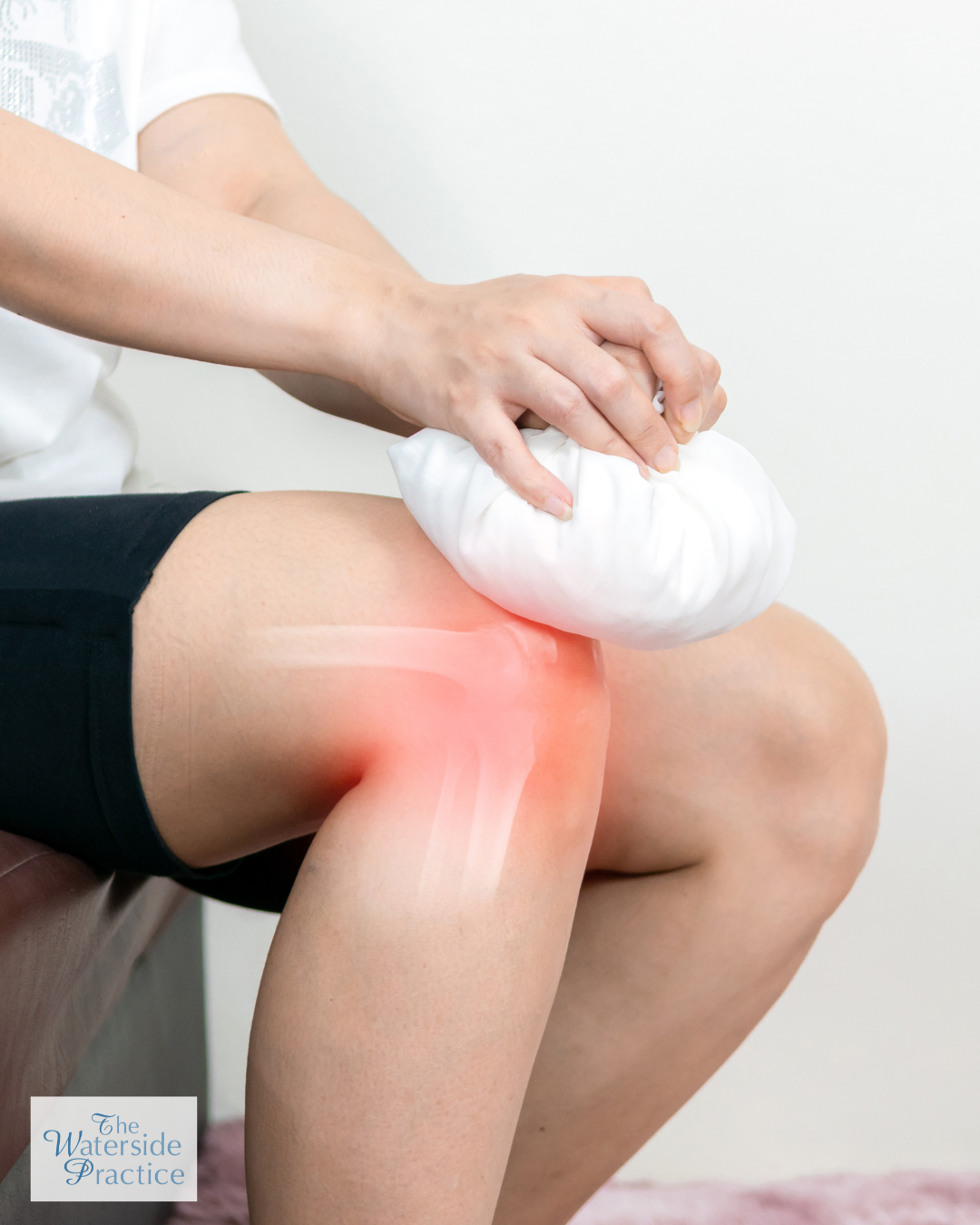
Simple measures such as applying ice to an acutely inflamed area can be helpful, particularly in the early stages. Ice works by reducing local blood flow and slowing down the inflammatory process, which can help ease pain and limit excessive swelling. It also provides a mild numbing effect, which many patients find relieving. Short applications of around 10 to 15 minutes, with a barrier between the ice and skin, are usually sufficient.
In some cases, medication can support this process. Under the guidance of your GP or pharmacist, non-steroidal anti-inflammatory drugs may be appropriate. Common over-the-counter options in the UK include ibuprofen, such as Nurofen, while prescribed options may include naproxen or diclofenac. These medications work by reducing the production of prostaglandins, helping to decrease pain and inflammation. They are not suitable for everyone, so individual advice is important.
Improving circulation through walking, mobility work, and hands-on treatment can support the clearing of inflammatory chemicals and bring fresh nutrients to the tissue.
Sleep is often underestimated. It plays a central role in regulating inflammation and allowing repair to take place. Without it, recovery is slower and symptoms often feel more intense.
Understanding your limits and gradually building tolerance is key. Many people fall into a cycle of doing too much when they feel better, followed by a flare-up. A more consistent, paced approach tends to be far more effective.
Nutrition supports this process in the background. Providing your body with adequate protein, healthy fats, and essential nutrients helps repair tissue and regulate inflammation.
Osteopathic treatment works by improving movement, reducing unnecessary tension, and addressing the underlying strain patterns that may be driving the issue. Often, this helps the body move out of a protective, inflamed state more efficiently.
A final thought
Pain and inflammation can feel alarming, particularly when they come on suddenly. But in many cases, they are not a sign that something is seriously wrong, rather that your body is responding and trying to protect you.
Understanding this can change the experience of pain quite significantly. When fear reduces, the body often follows.
If you are struggling with ongoing pain, stiffness, or a recent flare-up, having that explanation and a clear plan can make all the difference.
If you would like support with this, you can book online or have a free 15 minute consultation call with one of our osteopaths to discuss further.
Online booking link https://thewatersidepractice.janeapp.co.uk/ or for a free consult video call https://thewatersidepractice.janeapp.co.uk/#/discipline/1/treatment/96